When a baby is born, parents are often offered a “well-baby package” or “child health package.” These packages may include pediatric visits, vaccines, growth checks, developmental evaluations, blood tests, hearing or vision checks, nutrition advice, and sometimes extra screening tests.
Some of these checks are strongly recommended. Some are reasonable depending on the child’s risk. Others may sound reassuring but are not usually recommended for healthy babies.
The goal is not to do “as many tests as possible.” The goal is to do the right screening at the right age, with a clear reason and a useful follow-up plan.
Check also the information on vaccine packages often part of these “well-baby packages”
First principle: screening is not the same as diagnosis
A screening test is used in a healthy-looking child to find a problem early, before it becomes obvious. A good screening test should meet three conditions:
- The condition is important.
- Early detection changes the child’s outcome.
- The test is accurate enough and does not create more harm than benefit.
This is why newborn hearing screening makes sense: early hearing loss can affect speech and language development, and early intervention matters. This is also why broad “just to check everything” blood panels are often not helpful: they may find minor, irrelevant abnormalities and create anxiety without improving health.
Part 1 — Recommended screening from birth to 2 years
Birth to hospital discharge
1. Newborn metabolic and genetic screening
In the United States, newborn blood spot screening is routine. A few drops of blood are taken from the baby’s heel to screen for serious genetic, endocrine, and metabolic disorders. The CDC explains that early detection can prevent death, disability, or severe long-term complications.
In China, newborn disease screening is also part of child health care, though the exact panel may vary by location and hospital. China’s national 0–6 years child health management standard says newborn follow-up should check whether newborn disease screening was completed and advise 补筛 — catch-up screening — if it was missed.
Evidence logic: this is one of the strongest examples of useful screening. Conditions such as congenital hypothyroidism or phenylketonuria may not be obvious at birth, but delayed diagnosis can cause severe developmental harm.
US vs China: both systems recommend newborn screening, but the US has a nationally coordinated Recommended Uniform Screening Panel framework, while China’s implementation may be more locally variable.
2. Newborn hearing screening
In the US, newborn hearing screening is standard, and the AAP Bright Futures schedule says newborn hearing screening should be confirmed, verified, and followed up when needed.
China also has a national newborn hearing screening program. A 2023 review describes newborn hearing screening in China as a developed national program, with its history beginning from high-risk infant hearing monitoring and expanding over time.
Evidence logic: hearing loss is not always visible in a newborn. Early detection allows early audiology evaluation, hearing support, and speech-language intervention.
US vs China: both recommend newborn hearing screening. China also continues behavioral hearing checks later in infancy under child health management standards.
3. Critical congenital heart disease screening
In the US, newborns are screened for critical congenital heart disease using pulse oximetry after 24 hours of age and before discharge. The AAP schedule includes this as a newborn procedure, and CDC notes that mandated screening has reduced early infant deaths from critical congenital heart disease.
In China, congenital heart disease detection may be part of newborn examination and clinical assessment, but I did not find the same kind of clearly quoted national universal pulse-oximetry recommendation in the sources retrieved for this draft.
Evidence logic: some serious heart defects may not be obvious immediately after birth. Pulse oximetry is quick, painless, and can identify babies needing urgent evaluation.
US vs China: this is more explicitly standardized in US preventive guidance. In China, practice may depend more on maternity hospital protocols.
4. Newborn jaundice / bilirubin assessment
The AAP Bright Futures schedule includes newborn bilirubin screening, with reference to the AAP hyperbilirubinemia guideline.
China’s 0–6 years child health management standard also specifically asks clinicians to observe and ask about jaundice during newborn home visits and the one-month follow-up.
Evidence logic: severe newborn jaundice can rarely lead to bilirubin neurotoxicity. Early recognition allows feeding support, repeat bilirubin testing, phototherapy when needed, and follow-up.
US vs China: both emphasize jaundice assessment, though the exact timing and method may differ by hospital and community follow-up system.
First week to 1 month
5. Feeding, weight, jaundice, and physical examination
The AAP recommends a newborn visit at 3–5 days of age, and within 48–72 hours after discharge, including feeding and jaundice evaluation.
China’s national child health management standard recommends a newborn home visit within one week after discharge, including feeding, sleep, stool/urine, jaundice, umbilical condition, oral development, temperature, birth weight and length, physical examination, and creation of the mother-child health handbook.
Evidence logic: this is less about “testing” and more about early clinical detection. Feeding problems, excessive weight loss, dehydration, jaundice, infection, and umbilical problems are most common in this early window.
US vs China: China’s public health model gives a prominent role to home or community-based newborn follow-up. The US model emphasizes early outpatient pediatric follow-up.
2 to 6 months
6. Growth monitoring: weight, length, head circumference
The AAP Bright Futures schedule includes length/height and weight at every preventive visit, head circumference through infancy, and weight-for-length in early childhood.
China’s 0–6 years child health management standard includes repeated measurements of weight, length/height, and head circumference during infant follow-up visits.
Evidence logic: growth is one of the most useful “screening tools” in pediatrics. Poor weight gain, faltering growth, disproportionate head growth, or rapid excessive weight gain can reveal feeding problems, chronic disease, endocrine disease, neurologic problems, or obesity risk.
US vs China: both strongly support growth monitoring. The clinical value comes not from one measurement, but from the growth trend.
7. Developmental surveillance at every visit
The AAP schedule includes developmental surveillance at preventive visits and formal developmental screening at selected ages.
China’s 0–6 years child health management standard includes growth, development, and psychological-behavioral assessment during infant health management visits.
Evidence logic: development is best assessed repeatedly. A single “development test” is less useful than careful follow-up over time: social smile, eye contact, head control, rolling, sitting, babbling, pointing, play, and parent concerns all matter.
US vs China: both systems include developmental monitoring. The US system more clearly separates “developmental surveillance” from formal standardized developmental screening.
6 to 12 months
8. Anemia / hemoglobin screening
In the US, the AAP Bright Futures schedule includes anemia risk assessment and a screening point around 12 months, with further testing based on risk.
In China, the national child health management standard recommends blood routine or hemoglobin testing at 6–8 months, 18 months, and 30 months. Some newer Chinese nutrition-feeding guidance also emphasizes hemoglobin testing around 6 or 8 months and 18 months as part of nutrition assessment.
Evidence logic: iron deficiency is common in infancy and can affect neurodevelopment. Screening is most useful when combined with feeding history: prematurity, low birth weight, exclusive breastfeeding without iron supplementation after the appropriate age, low iron complementary foods, or excessive cow’s milk later in toddlerhood.
US vs China: China tends to recommend hemoglobin checks earlier and more repeatedly in the public child-health schedule. The US approach is more focused around 12 months plus risk assessment.
9. Hearing follow-up after newborn screening
In the US, routine newborn hearing screening is the key universal screen; later hearing testing is usually based on risk, concerns, or scheduled childhood screens.
In China, infant health management includes behavioral hearing screening at 6, 12, 24, and 36 months in the national standard.
Evidence logic: some hearing loss is delayed-onset or missed initially. Rechecking hearing behavior during infancy may identify concerns, especially if parents report poor response to sound or delayed babbling.
US vs China: China’s child-health schedule is more explicit about repeated behavioral hearing screening in infancy and toddlerhood.
10. Vision and eye health
In the US, the AAP schedule recommends vision risk assessment in infancy. Instrument-based screening may be used at 12 and 24 months, while formal visual acuity screening is usually later, around 3–5 years when cooperative. The USPSTF recommends vision screening at least once between ages 3 and 5 years, but states that evidence is insufficient for universal vision screening in children younger than 3 years.
China issued a national 0–6 years eye care and vision examination service standard in 2021, delivered through primary/community health institutions and maternal-child health institutions. Some local implementations include eye disease screening and vision assessment in infant follow-up.
Evidence logic: some eye problems — cataract, strabismus, severe refractive error, retinoblastoma signs, abnormal red reflex — should be caught early. But “full eye testing” in a healthy baby is not always necessary unless there are risk factors or clinical signs.
US vs China: China appears more proactive with early eye-health checks in the 0–6 years public health framework. The US is more cautious about formal universal vision screening before age 3 because evidence is less certain.
2 to 24 months
11. Autism screening
The AAP Bright Futures schedule includes autism spectrum disorder screening at 18 and 24 months.
The USPSTF, however, has concluded that evidence is insufficient to assess the balance of benefits and harms of universal autism screening in young children when no concerns have been raised.
China’s general child health management standard includes psychological-behavioral developmental assessment, but the sources retrieved here do not show the same clearly standardized national autism-specific 18/24-month screening recommendation as the AAP schedule.
Evidence logic: autism signs may emerge in the second year of life: reduced eye contact, limited response to name, lack of pointing, limited joint attention, repetitive behaviors, delayed social communication. Screening is useful only if positive results lead to proper developmental evaluation and early intervention.
US vs China: the US AAP is more explicit about autism screening at 18 and 24 months. There is also a US evidence debate: AAP recommends it, while USPSTF says evidence is insufficient for universal screening in children without concerns.
12. Oral health and dental risk
The AAP schedule includes oral health risk assessment and fluoride varnish starting when teeth erupt. The USPSTF recommends fluoride varnish on primary teeth for infants and children starting at tooth eruption.
China’s 0–6 years child health management standard includes oral health guidance during child follow-up and referral for oral developmental abnormalities or caries.
Evidence logic: early childhood caries can begin soon after tooth eruption. Prevention is practical: brushing with age-appropriate fluoride toothpaste, avoiding sleep-time bottles with milk/juice, limiting frequent sugar exposure, and dental referral when needed.
US vs China: both address oral health, but the US guidance is more explicit about fluoride varnish in primary care.
Simple age-by-age summary
| Age | Screening/checks generally supported | US emphasis | China emphasis |
|---|---|---|---|
| Birth | Newborn blood spot, hearing, CCHD pulse oximetry, jaundice | Strongly standardized | Newborn disease screening + hearing; hospital/local practice varies |
| 3–7 days | Feeding, weight, jaundice, physical exam | Early pediatric visit | Newborn home/community visit |
| 1 month | Growth, feeding, exam, vaccine review | Well-child visit | 28–30 day health management with Hep B dose 2 |
| 2–6 months | Growth, development, feeding, vaccines | Repeated well-child visits | 3, 6, 8 month child health management |
| 6–8 months | Growth, development, hearing concerns, anemia risk | Risk-based; anemia later around 12 months | Hb/blood routine at 6–8 months; behavioral hearing at 6 months |
| 12 months | Growth, development, anemia, lead risk, oral health | Hb around 12 months; lead based on risk/legal context | 12-month child health visit; hearing check |
| 18 months | Development, autism screening, anemia risk | Autism screen; developmental monitoring | Hb/blood routine; developmental/behavioral assessment |
| 24 months | Development, autism screening, hearing, growth | Autism screen; possible instrument-based vision screen | 24-month visit; behavioral hearing; growth/development assessment |
Part 2 — Tests usually not recommended for healthy babies
1. Routine broad blood panels “just to check everything”
A healthy baby does not usually need liver function, kidney function, electrolytes, inflammatory markers, thyroid tests, tumor markers, immune panels, or broad vitamin panels without a clinical reason.
Why not?
Because the chance of finding a useful result is low, while the chance of finding a borderline or irrelevant abnormality is real. That can lead to repeat blood draws, anxiety, unnecessary referrals, and extra cost.
A targeted hemoglobin screen for anemia is different: it is recommended at specific ages or risk points. A broad “health check blood panel” is not the same thing.
2. Routine urine screening in healthy children
Routine screening urinalysis is not recommended in healthy, asymptomatic pediatric patients as part of well-child care. Choosing Wisely guidance recommends limiting urine screening to children with higher kidney-risk factors, such as known kidney disease, urinary tract anomalies, hypertension, prematurity, intrauterine growth restriction, systemic disease, or relevant family history.
Why not?
Urine tests often produce false alarms: mild protein, trace blood, contamination, or transient abnormalities. These can lead to repeat testing without improving outcomes.
3. Food allergy panels without a clear reaction history
Food allergy testing should be guided by a specific clinical story. Broad IgE food panels in a baby who has no clear allergic reaction are not recommended because false positives are common. A child may test “positive” to a food but tolerate it normally.
Why not?
False positives can lead parents to remove important foods unnecessarily, which may worsen nutrition and increase anxiety.
4. Food IgG or “food intolerance” panels
Food IgG testing is not recommended for diagnosing food allergy or food intolerance. The AAAAI explains that IgG to foods is usually a normal immune response to exposure and may even be associated with tolerance rather than disease.
Why not?
These tests can label normal foods as “problem foods,” leading to unnecessary restriction, confusion, and sometimes nutritional harm.
5. Routine ultrasound, X-ray, CT, or MRI screening
A healthy baby does not need routine abdominal ultrasound, brain ultrasound, chest X-ray, CT, or MRI as a “screening package” unless there is a specific concern.
Why not?
Imaging may find incidental findings that do not matter but trigger further testing. CT also involves radiation. MRI may require sedation in young children if stillness is needed. Ultrasound is safer, but “safe” does not automatically mean “useful.”
Exceptions exist: for example, hip ultrasound may be appropriate in babies with breech presentation, abnormal hip exam, or other risk factors. That is targeted screening, not general package screening.
6. Routine trace element testing
Tests for zinc, calcium, magnesium, selenium, copper, or other “trace elements” are often marketed as nutrition screening. They are not usually recommended for a healthy growing baby with a normal diet and normal growth.
Why not?
Blood levels may not accurately reflect total body stores, and borderline results often do not change management. Feeding history, growth pattern, vitamin D intake, iron intake, and clinical examination are usually more useful.
7. Routine bone density, bone age, or growth hormone screening
These are not general baby screening tests.
Why not?
Bone age and endocrine testing are useful when there is abnormal growth, early puberty signs, delayed puberty, or other clinical concerns. In a healthy infant or toddler, growth monitoring is the correct first-line screen.
8. Routine genetic testing in a healthy baby
Expanded genetic testing may be useful in selected cases: congenital anomalies, developmental delay, seizures, abnormal newborn screen, strong family history, or specialist recommendation.
Why not as routine screening?
Genetic tests can produce uncertain findings, anxiety, privacy concerns, and results that do not change care. They should usually be ordered with proper counseling.
When a well-baby package may be useful
A package may be genuinely useful when it buys more than a discount.
It may make sense if it provides:
- Continuity with a trusted pediatrician
Seeing the same doctor over time is often more valuable than a long list of tests. - Clear visit schedule
New parents may appreciate a structured plan: newborn visit, 1 month, 2 months, 4 months, 6 months, 9 months, 12 months, 18 months, 24 months. - Vaccine planning
This is especially useful for international families navigating Chinese vaccines, imported/self-paid vaccines, travel schedules, and future school or relocation requirements. - Reliable access when the baby is sick
A package that includes timely sick-visit access can be more valuable than one that mainly includes “screening tests.” - Feeding, sleep, growth, and development counseling
These are the issues parents struggle with most. A good package should include enough time for discussion, not just measurements. - A clear referral pathway
If hearing, vision, development, allergy, or growth concerns are found, the clinic should be able to explain what happens next. - Transparent evidence-based contents
Parents should know which items are standard screening, which are risk-based, and which are optional.
When a package may not make much sense
A package is less useful when:
- The main attraction is a long list of tests
More tests do not automatically mean better care. - The family already has reliable pediatric follow-up
If parents already have a trusted pediatrician and easy vaccine access, the package may duplicate care. - The package locks the family into one hospital without flexibility
Babies get sick at inconvenient times. Location, opening hours, emergency access, and doctor availability matter. - The package does not clearly state what is included
Parents should ask: Are sick visits included? Are vaccines included or only discounted? Are imported vaccines included? Are labs included? Are follow-up visits after abnormal results included? - It includes many non-recommended screening tests
Routine allergy panels, trace elements, broad blood panels, urine screening, or imaging in a healthy baby should raise questions. - It creates pressure to consume care
If parents feel they must “use up” services, care can shift from need-based medicine to package-based consumption.
Questions parents should ask before buying a package
Before paying, parents can ask:
- Which visits are included, and at what ages?
- Are sick visits included, or only well-baby visits?
- Are vaccines included, discounted, or charged separately?
- Which vaccines are covered: national program, private/self-paid, imported, or all?
- Are blood tests included? If yes, which ones and why?
- Are developmental checks done with a validated tool or only a quick observation?
- What happens if a screen is abnormal?
- Can I choose the pediatrician?
- Can the package be used at different branches?
- What is the refund policy?
- Can insurance be used?
- Does the package include online/phone/WeChat advice?
- Are extra tests doctor-recommended or package-driven?
Practical conclusion
For a healthy baby from birth to 2 years, the most important “screening” is not a big package of tests. It is:
- good newborn screening,
- hearing screening,
- jaundice and feeding follow-up,
- repeated growth measurements,
- developmental surveillance,
- targeted anemia screening,
- vaccine planning,
- oral health prevention,
- autism/developmental screening at the right age,
- and careful listening to parent concerns.
A good well-baby package can be valuable if it improves continuity, access, vaccine planning, and evidence-based counseling.
A poor package is one that sells reassurance through unnecessary tests.
The best question is not: “How many tests are included?”
The best question is: “Which parts of this package will actually improve my child’s health?”
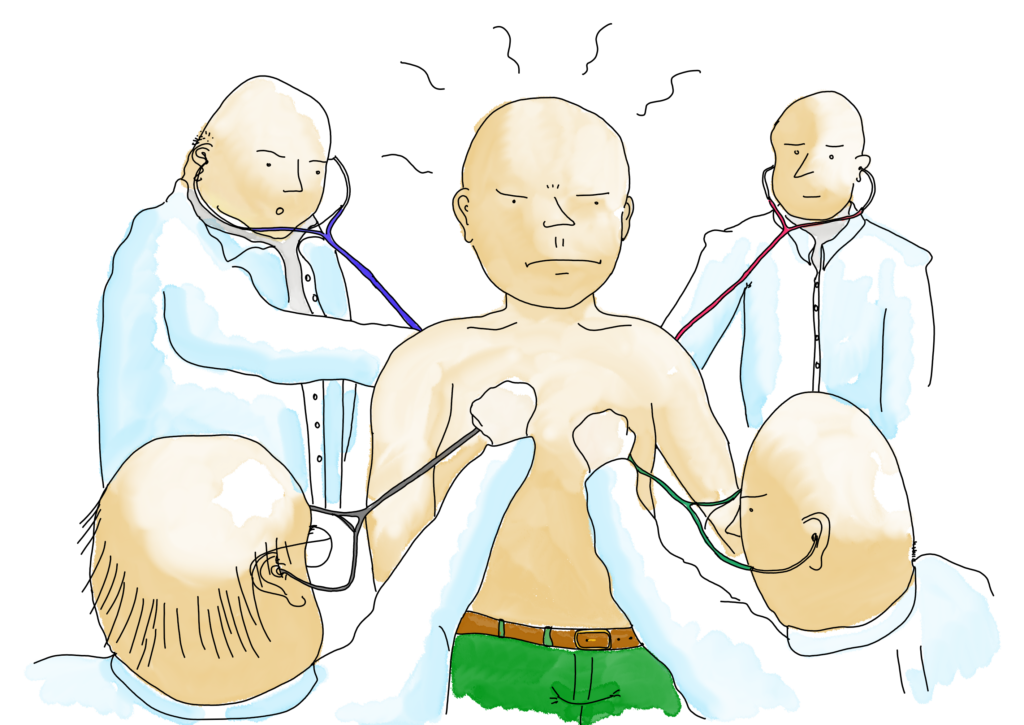
The doctor consultation may be the most valuable part of the package
When parents compare well-baby or vaccine packages, they often look first at the list of tests, vaccines, and discounts. But one of the most important parts of the package may be the consultation with the pediatrician.
A good well-baby visit is not just a quick measurement or a checklist. It is a time to discuss how the baby is growing, feeding, sleeping, moving, interacting, and developing. Parents can ask about breastfeeding or formula feeding, weight gain, reflux, stools, crying, sleep routines, safety at home, vitamin D, introduction of complementary foods, vaccines, and the many small questions that naturally come with caring for a young baby.
This matters because many normal baby behaviors can look worrying to new parents. At the same time, some early signs do deserve attention. A trusted pediatrician helps parents understand the difference: what is normal, what needs observation, what needs follow-up, and what truly needs testing or referral.
This is also one of the best protections against unnecessary screening. A good doctor does not simply order more tests to reassure parents. Instead, they listen carefully, examine the baby, review the growth and development pattern, and recommend tests only when there is a real reason.
So before buying a discounted package, parents should ask themselves: Will this package give us access to a pediatrician we trust, who communicates clearly with us? If the package is cheaper but parents still feel they need to see another pediatrician elsewhere for real advice, the financial advantage may quickly disappear.
In practice, the best package is not the one with the longest list of tests. It is the one that provides good preventive care, reliable vaccine planning, and enough time with a doctor who can guide parents calmly and appropriately.