What about fever: what is it after all; should we worry about it; should we treat it?
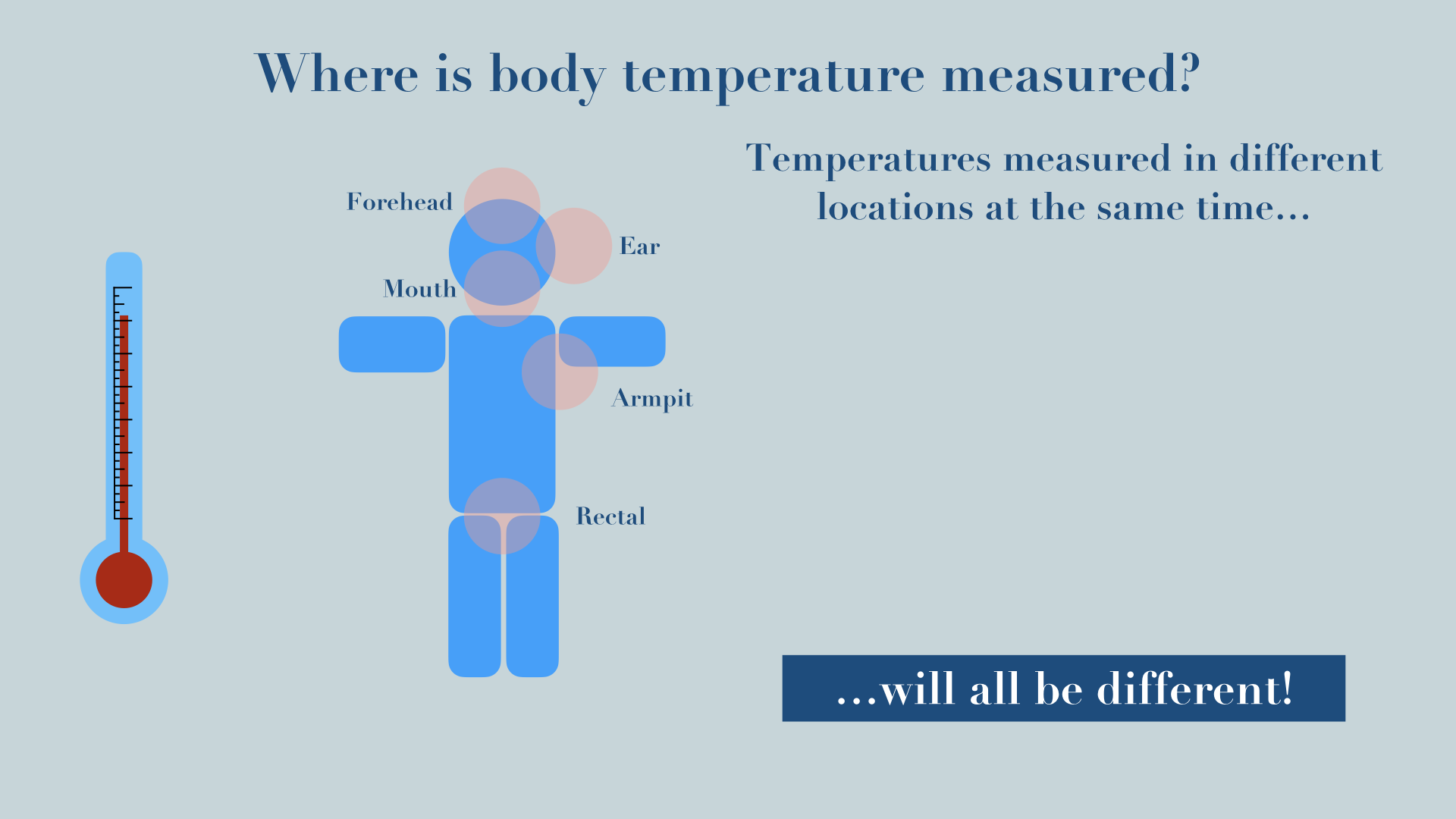
Measuring temperature in all these locations at the same time will show sometimes broadly different results.
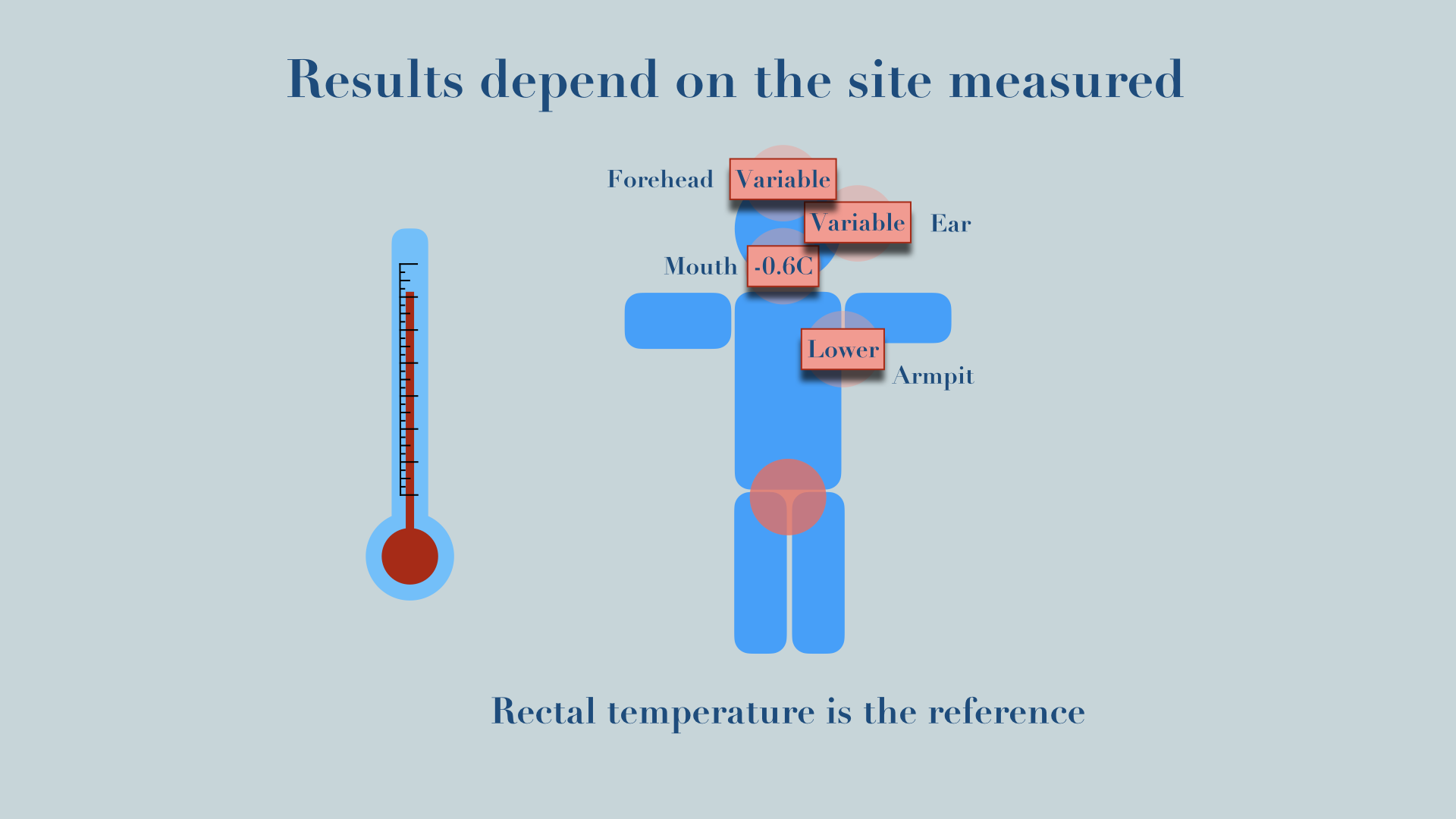
The temperature closest to real body temperature is found in the rectum This is the reference; then, the mouth temperature, when well measured, is consistently lower than rectal temperature by about 0.6C; the armpit will give a lower reading than the rectal temperature but without consistency in its value.
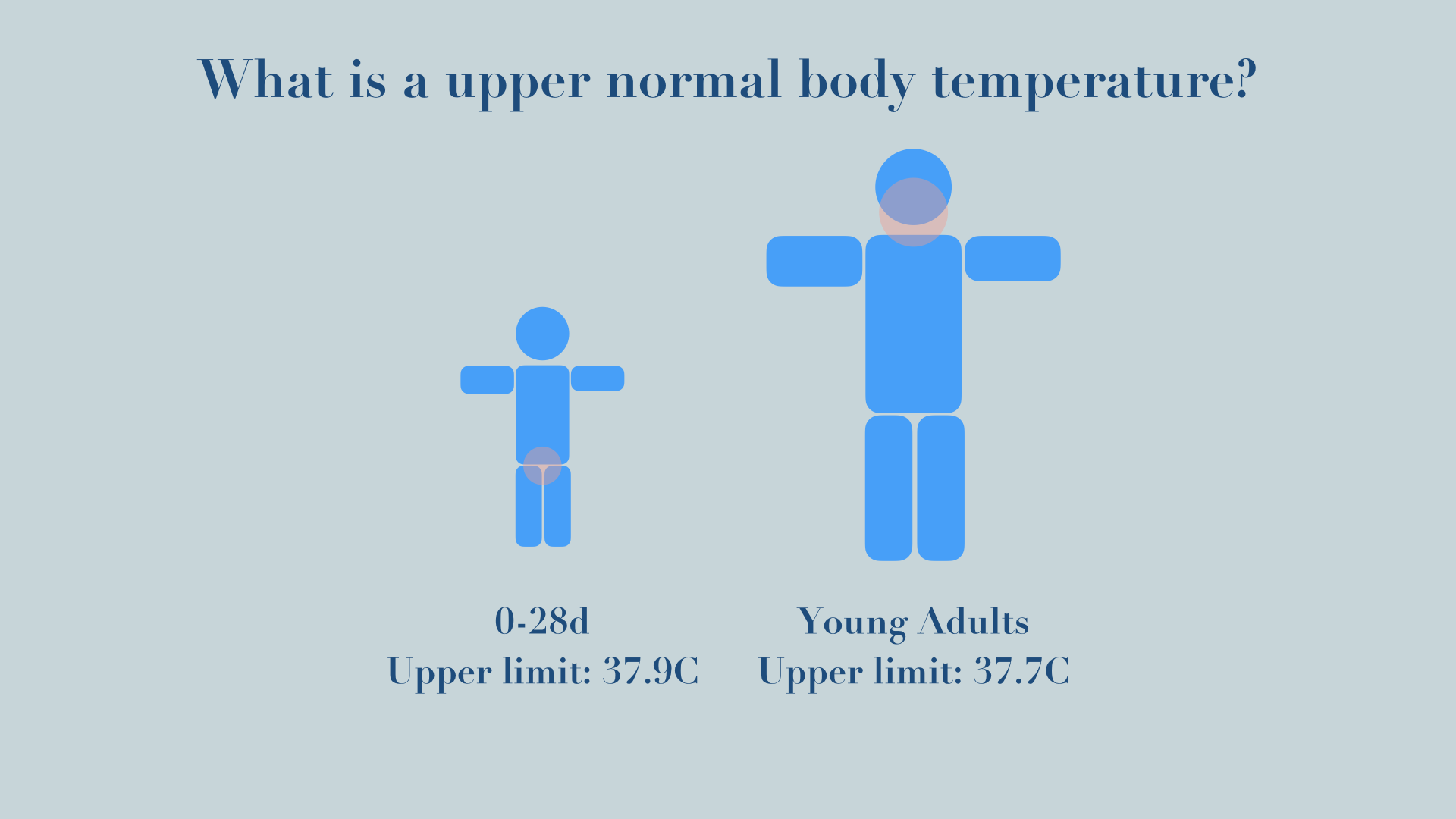
A temperature of 37.9C rectally in a neonate is the upper limit of the normal body temperature and from there up (>=38C)
it should raise the concern that something abnormal is going on, even the possibility of a serious illness for a child of that age.
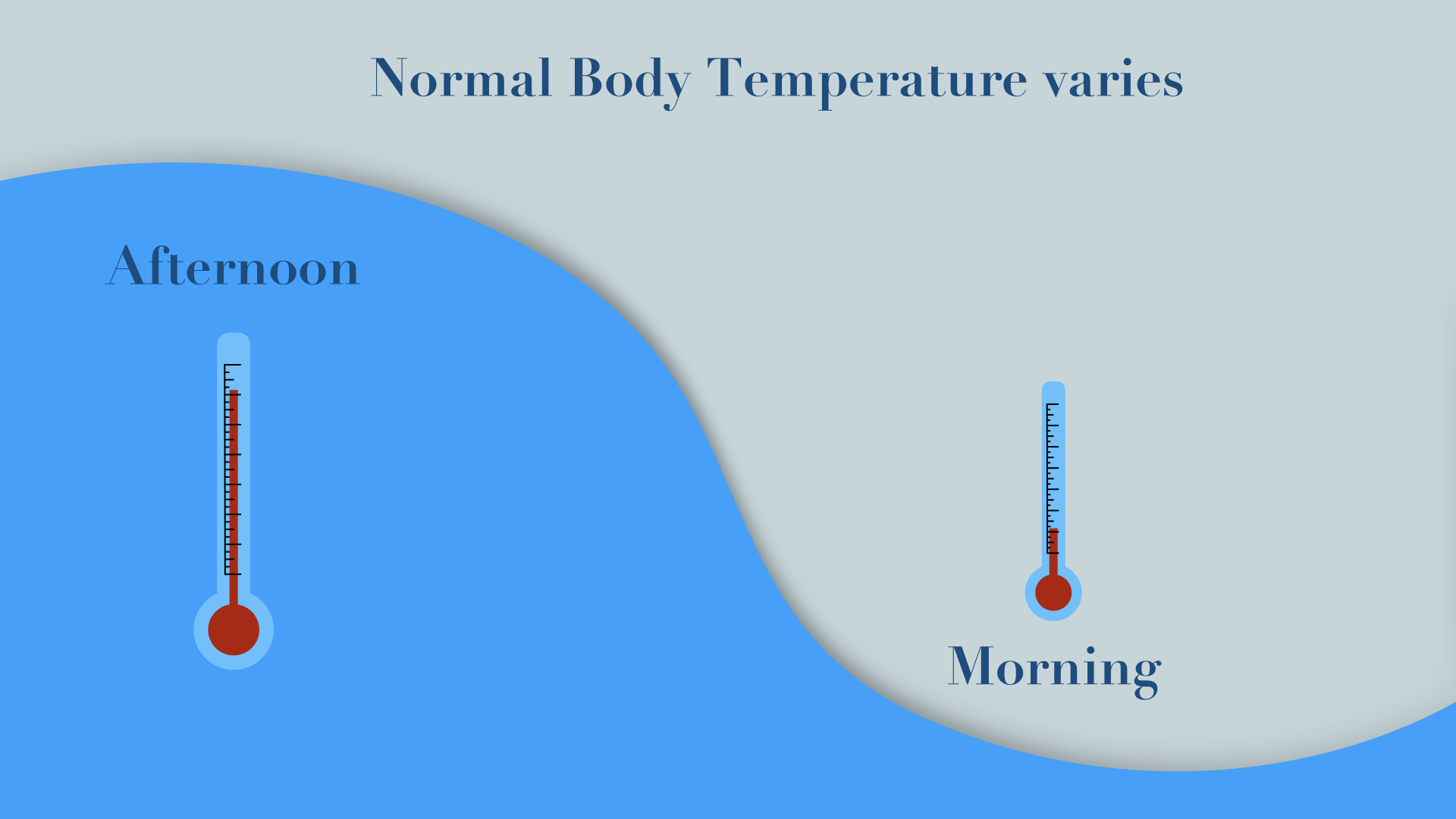
Body temperature is typically higher in the afternoon and such differences persists when there is a fever.
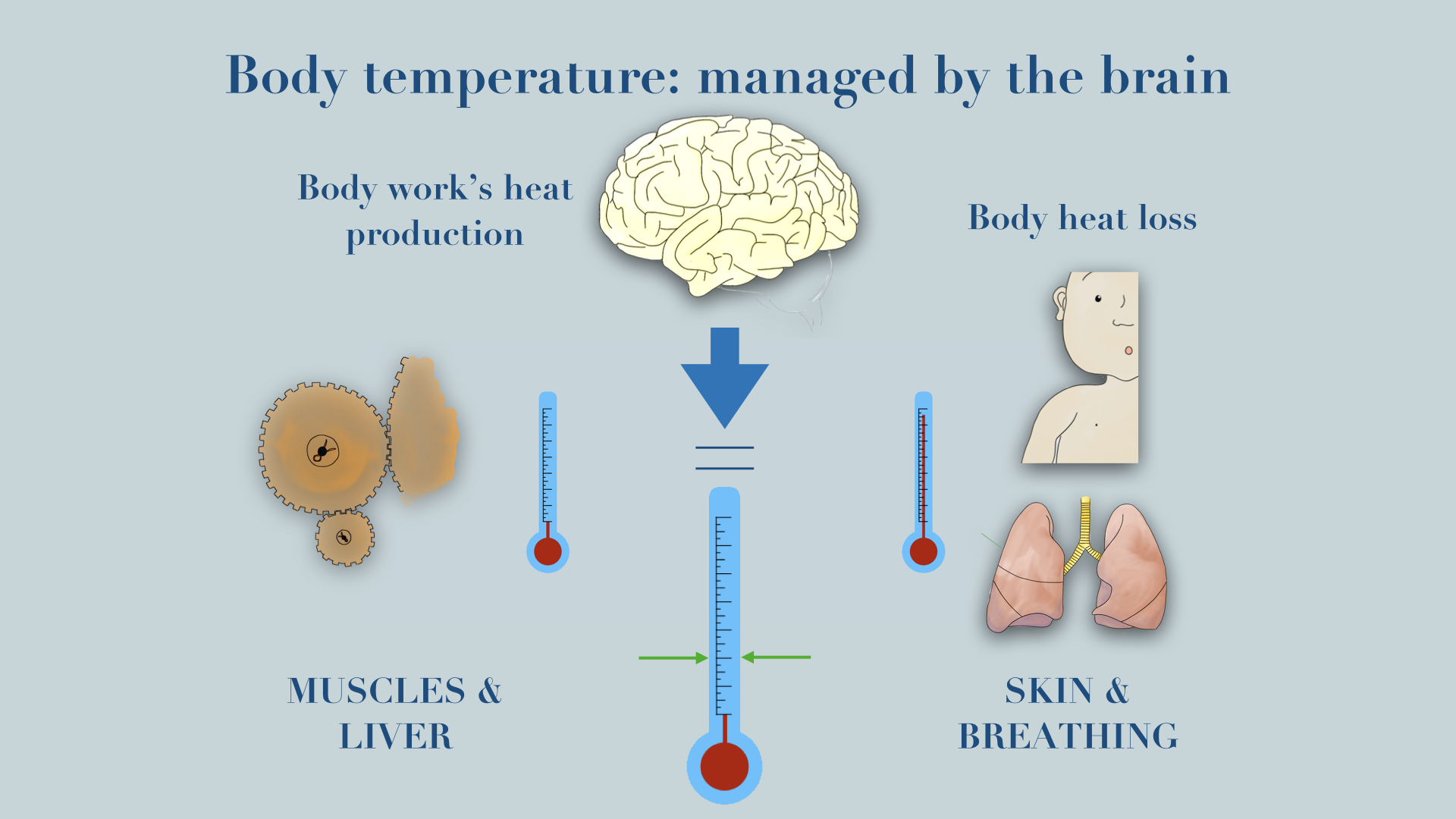
Body temperature is CONTROLLED within certain limits.
The control is achieved by temperature sensors that can trigger more heat dissipation if the system temperature reaches a certain level.
Our body produces heat by its activity (mainly the muscles and liver);
The skin and breathing dissipate excess heat.
The brain, in turn, controls the system so that body temperature stays within set limits.
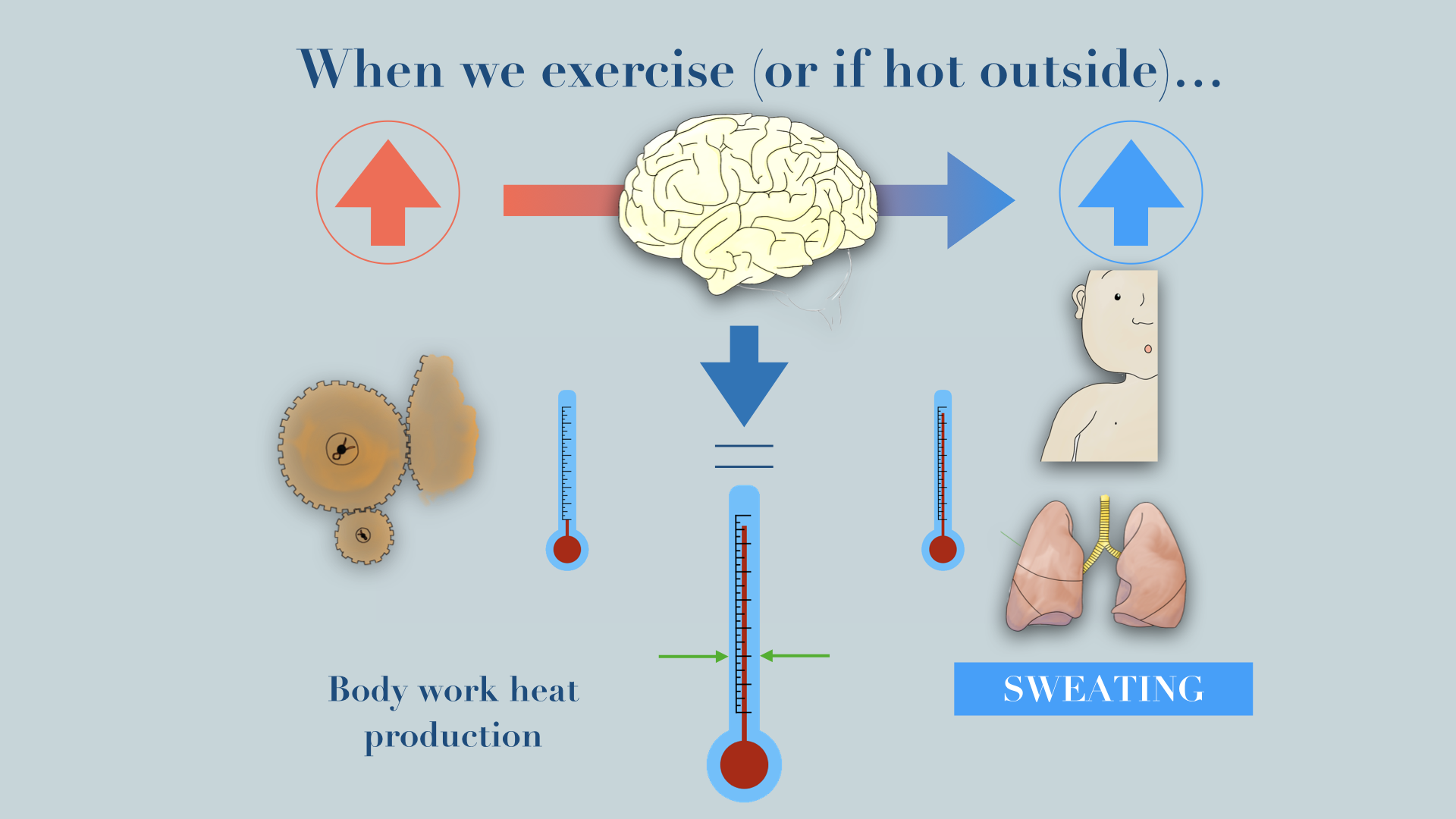
For example, if we exercise, we produce more heat, our body temperature increases.
The brain will feel it and activate heat dissipation processes like sweating, increasing blood flow in the skin and breathing faster.
That way the body temperature can go back to normal.
In some situations – like when it is very very hot (>35C) – it becomes more difficult for the body to dissipate the excess heat and there is a risk of abnormal and uncontrollable rise in the body temperature to dangerous level (>42C). This is what is called a heat stroke.
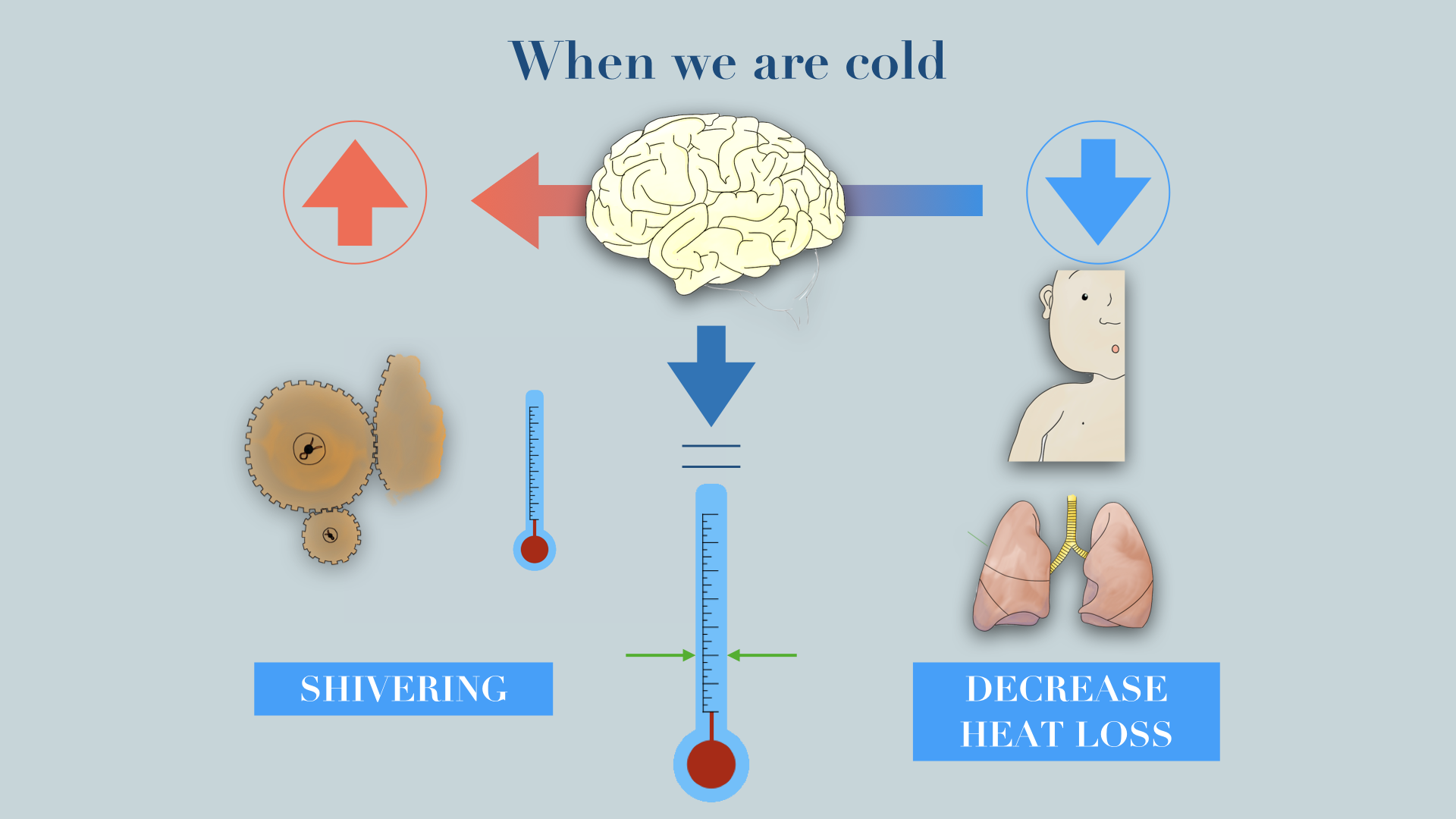
We need a minimum body temperature to function properly, which is why any abnormal drop in the body temperature will trigger a reaction from the brain to start heat production and conservation measures, including increased muscles activity like shivering, decreased blood perfusion in the skin but also behavioural processes like the desire to move and to cover our body.
Sometimes, these heat conservation measures are overwhelmed and temperature becomes too low for the body to function properly. This is what happens in drowning and prolonged exposure to extreme cold. It is called hypothermia, defined as a body temperature of 35C or lower.
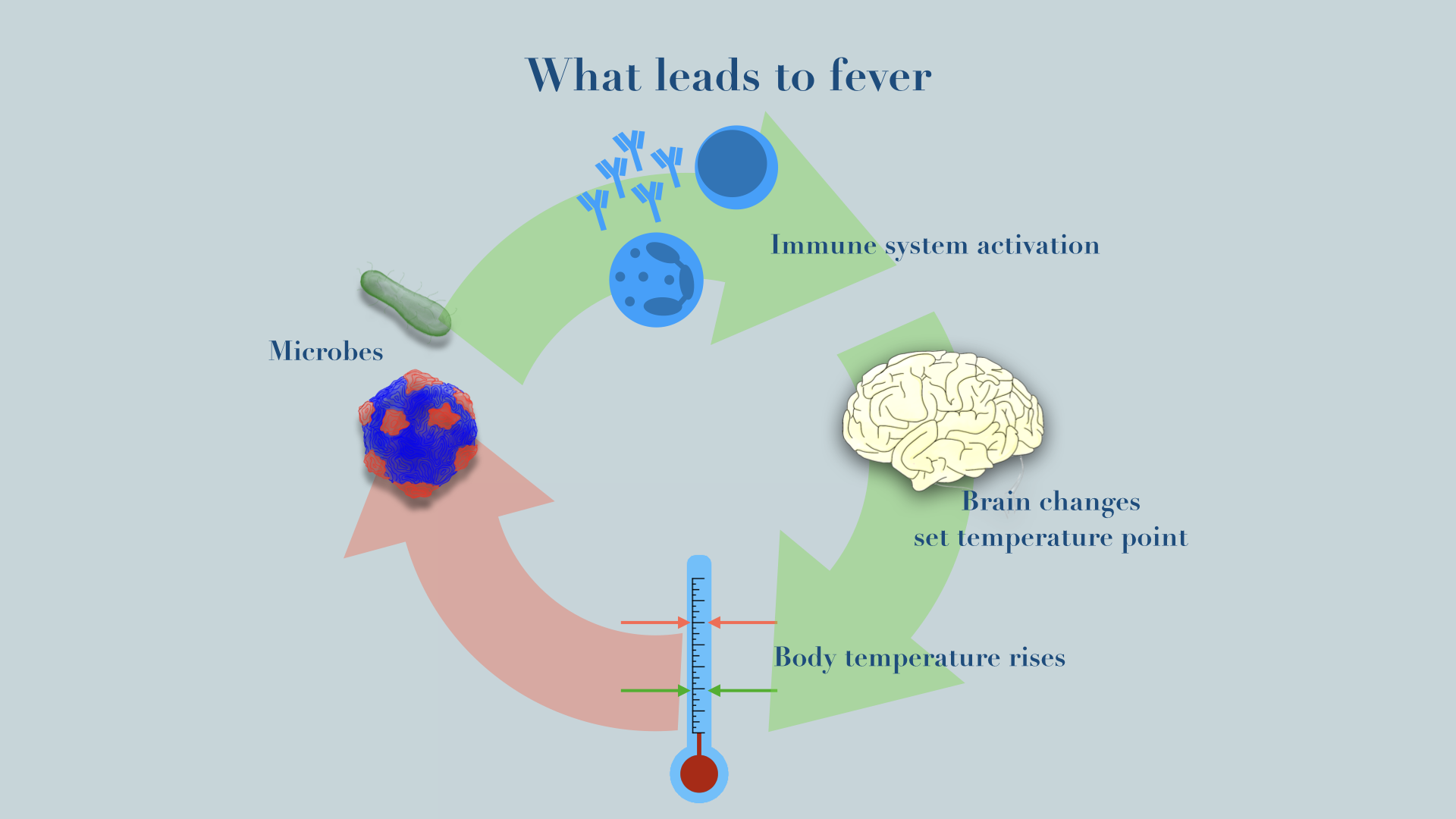
The process of fever is fairly complex, but we could summarize it in a few simple steps:
1. microbes, nasty viruses or bacteria for example, were discovered by the immune system in our body;
2. upon that discovery, the immune system starts to respond to the attack and produces a broad range of chemicals, which reach the brain;
3. The brain will then release it own chemicals that will have the effect to bring the set temperature point to a higher level: a bit like changing the thermostat of heating system in a house, from say 37C to 39C.
4. Body temperature will then raise to 39C and stay there until the brain has decided (from chemical clues sent by the immune system or an antifever medicine) that it can set the temperature back to a lower level.
5. Higher body temperature in turn is thought, to a certain extent, to increase the effectiveness of the immune system activity against the microbes.
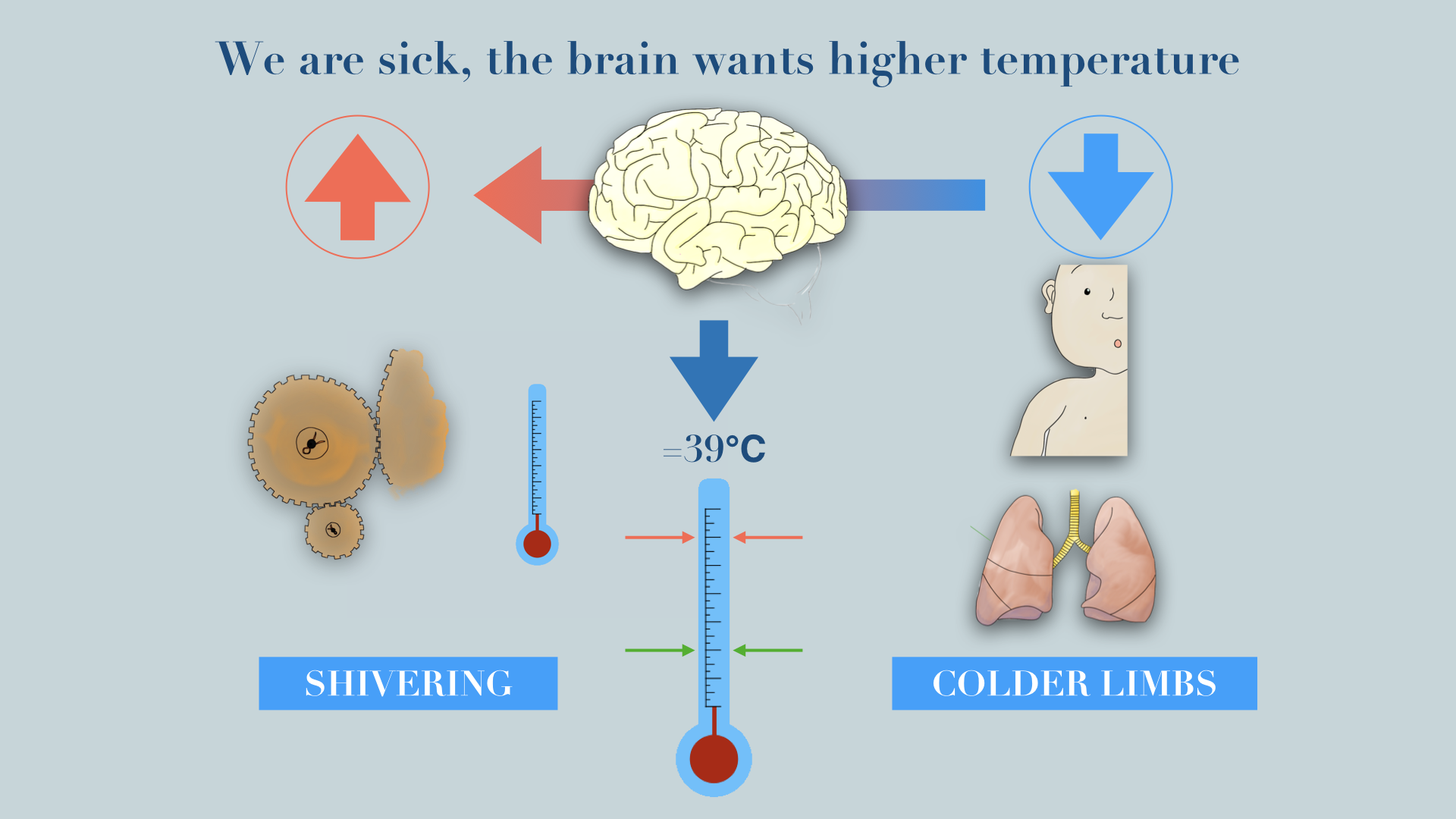
To raise the temperature, the brain will use the heat production processes and limit heat dissipation that we have just discussed, pretty much as if our body was feeling too cold:
1. it will send instructions to decrease the heat loss in the skin, by decreasing blow flow in the skin – that is the familiar cold hands and feet observed when we have fever;
2. we will also want to cover ourselves to keep warm;
3. the brain will also increase heat production by increasing muscles and body cells activity: this is the shivering that we experience when we have fever, as when we are cold.
4. The body temperature will then rise to the new temperature point set by the brain, for example, 39C
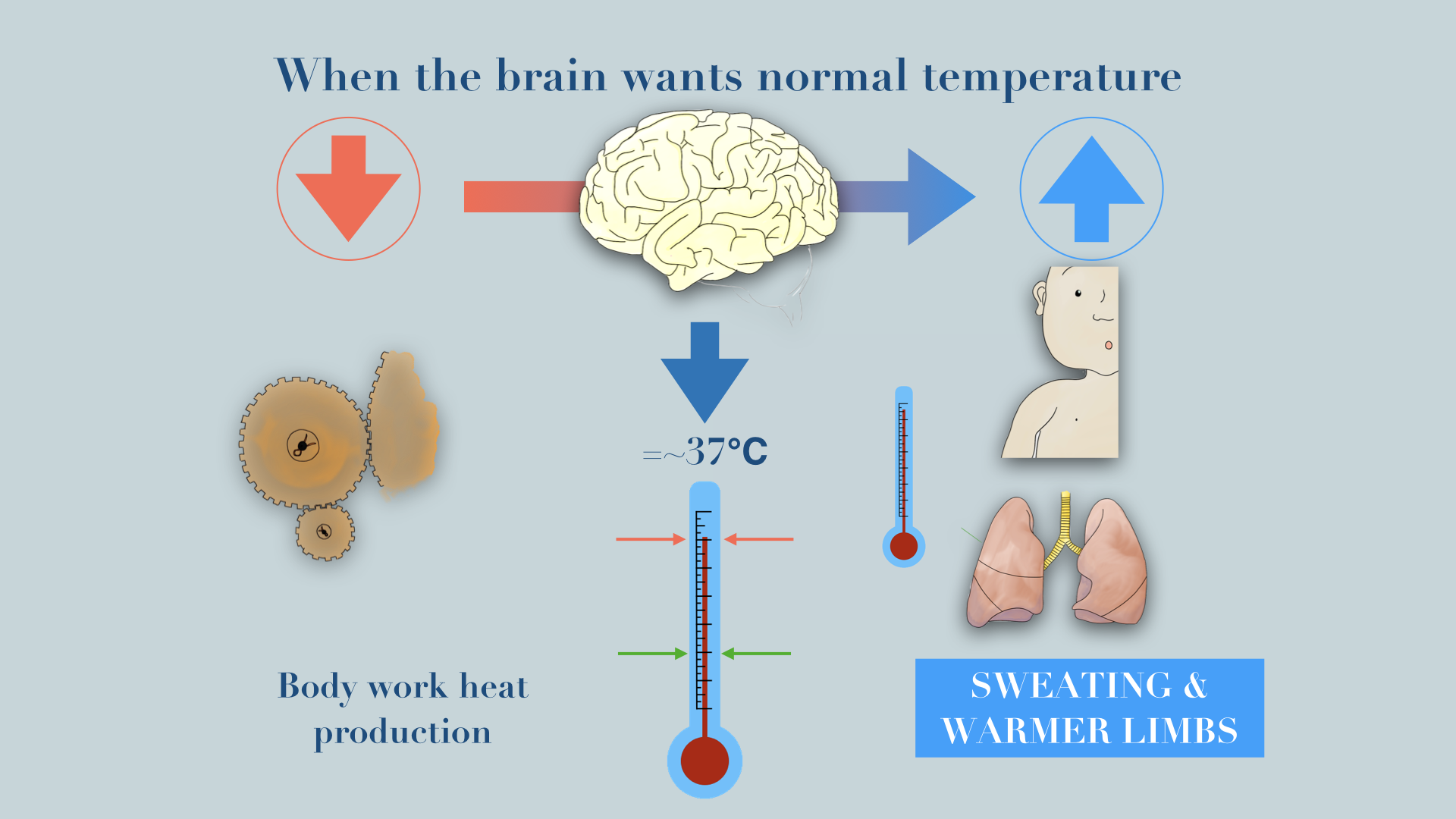
At some point the brain will want to go back to a more normal body temperature, which will then be achieved by the same processes that we encountered as we were exercising:
1. the brain will try to increase blood flow in the skin, activate sweating which will help to dissipate excess heat;
2. until the goal of the new body temperature set point is reached;
3. This would happen naturally during a cycle of fever or of course when using an antifever drug.
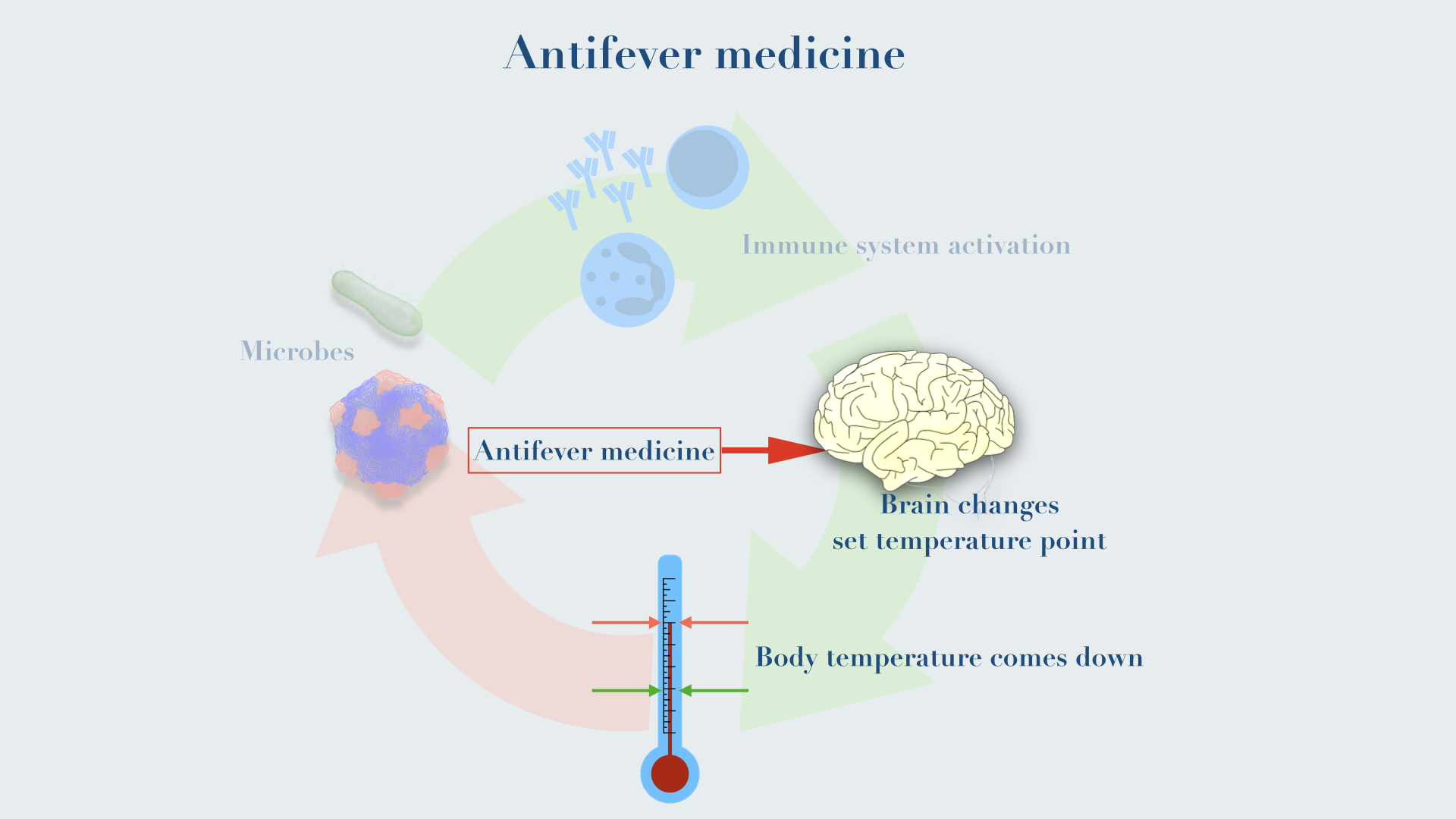
Indeed antifever medicine works by tricking the brain that there is no need anymore for a higher body temperature and so it will respond by bringing the body temperature to a lower level.
Antifever medicine does that only for a while and doesn’t treat the underlying illness that has triggered the fever: fever will come back after a while until the immune system has effectively eradicated the illness or until an effective treatment has been given to cure the illness.
Some children with serious illnesses – some metabolic diseases or heart diseases, or kids in the intensive care unit – may become worse when they have fever because fever increases the work of our body, which may be too much for these kids.
But for normal, otherwise healthy, children fever’s increased demand on the body will be well tolerated, beyond the discomfort it produces. That is why it is reasonable to propose an antifever medicine, like paracetamol or ibuprofen, if there is a discomfort.
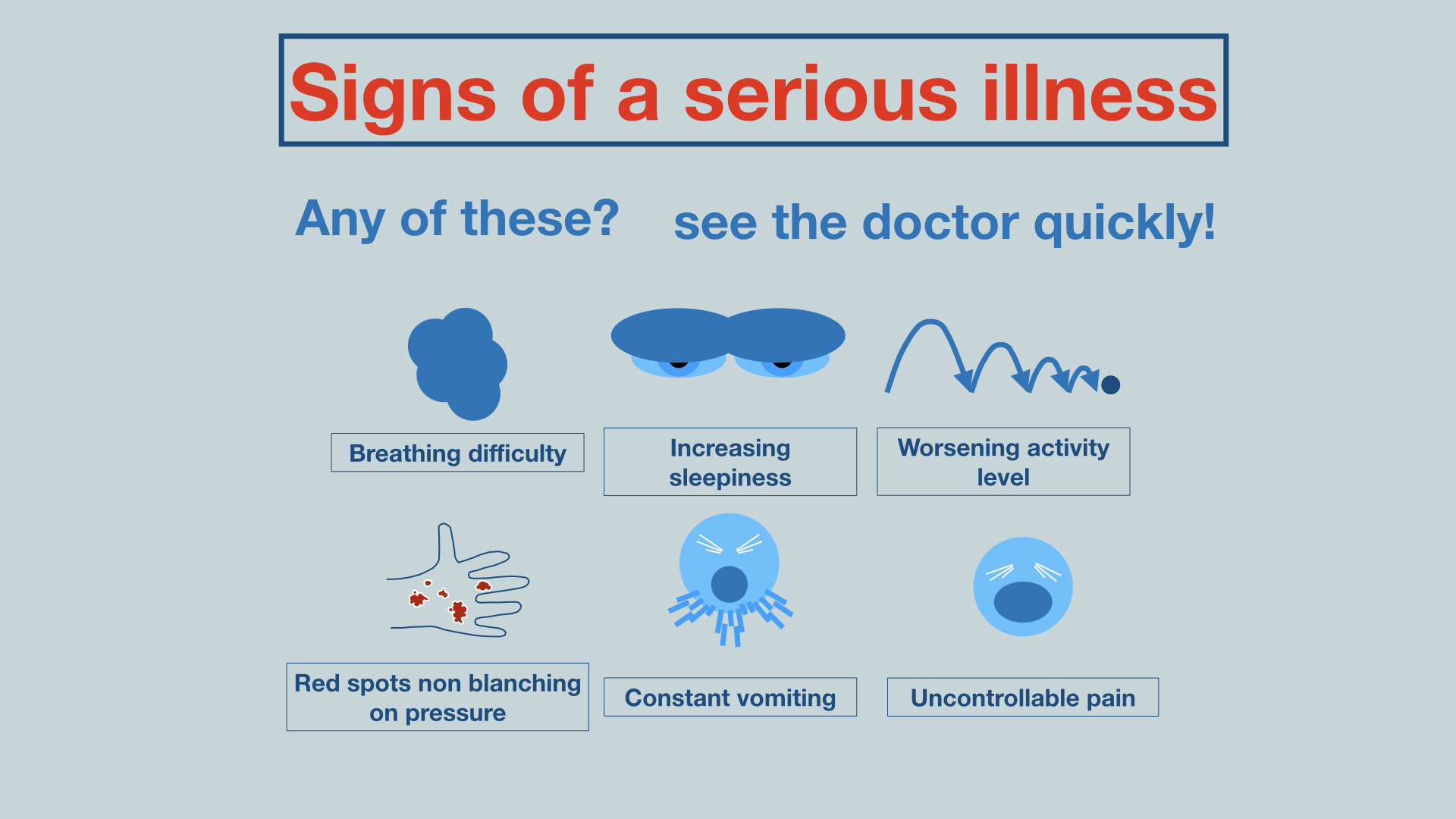
The most important thing to remember about fever is that it may be the sign of a serious illness, although in our modern city life where kids are well vaccinated, are usually well nourished and live in a clean environment, most fevers are likely caused by viruses and self-limiting illnesses.
You should definitely see a doctor in the following circumstances:
– an infant younger than 3 months with fever >= 38C;
– a child who is less and less active, presents red spots on the skin, vomits all the time, is less conscious or irritable, or has difficulty breathing or is in uncontrollable pain.
– a child who has had high fever (>=38.5C) for more than 72h;
– a young girl with no sign of illness other than fever, to exclude a urine infection.